Types of Videos
For those who are new to meditation, a series of short, instructional videos may help to provide clarity on the most basic aspects of this practice in a Buddhist setting. Just what am I supposed to be doing (or not) in meditation? How am I to arrange my body? Is there a correct posture? Why is the awareness of breath so central to this practice, and how is this most basic object of mediation to be skillfully used? We believe the instructions on offer can be helpful, and may even present a few surprises to those who are trying out this ancient practice for the first time.
While we practice sitting together as a Sangha mostly in silence, ongoing verbal prompting or guidance by a teacher may also be offered. Some of this guidance simply expands upon the basics discussed in the first series of videos, but is now offered while one is actually engaged in meditation practice. Other guided meditations of a more metaphysical nature seek to assist the student in developing awareness of the dynamic, but ultimately non-dual nature of breath and body; heart and mind; thinking and non-thinking. Practical, ethically-oriented guided meditations employ visualization of wholesome states of the heart/mind (citta, in Pali), often in the context of healing emotional wounds and helping to remove the obstacles which prevent us from realizing our essential unity with the world and all of its beings.
Meditation is the fundamental practice that supports all aspects of the Buddhist project throughout its vast range of historical incarnations, the oldest traditional literature of the Tripitaka presents the wisdom and doctrine of the historic Buddha largely in the context of his adventures as a discursive teacher: Siddhartha Gautama speaks before disciples and curious spectators, ordinary folk and aristocrats, in wilderness parks and palaces, indeed anywhere he finds an appropriate occasion to offer words of instruction. The Dharma Talk thus has a long and venerated pedigree. Generally given ex-tempore following formal meditation practice, often in the setting of a retreat, these talks can be especially clear and engaging. Here such talks are given by our contemporary teachers on a wide range of topics in Buddhist philosophy and ethical orientation.
In January 2025 Jampa and his family lost their home and all their belongings to the Eaton fires. As a show of love and support for Jampa, members of the LBM community came together to gift him a bell.
How does one be...
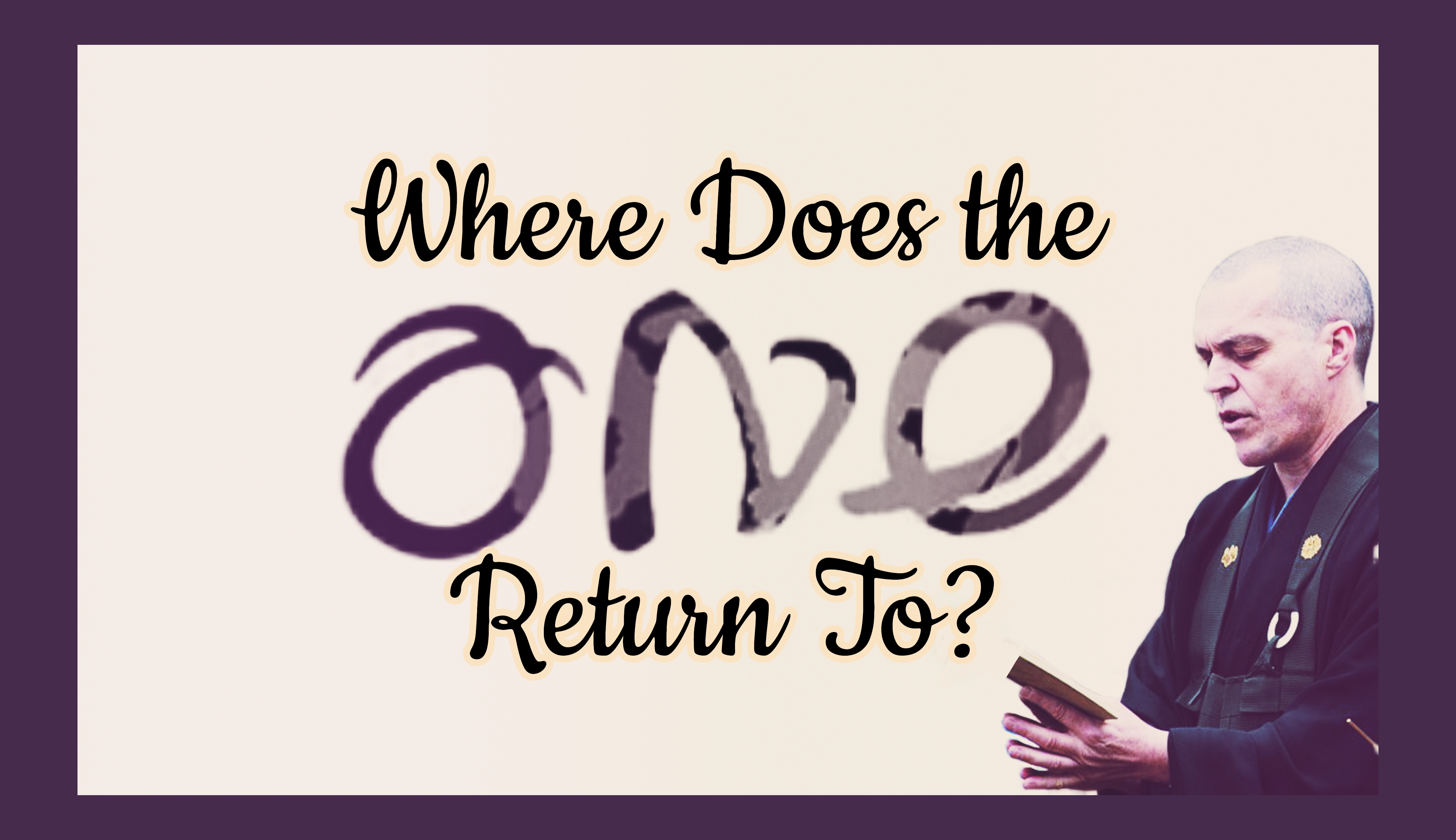
If myriad things return to one, where does the one return to? The realization of Zen lies in deeply embodying the understanding of two key principles: sameness and difference, or alternatively, oneness and diversity. In ...
Our practice is our life, and our life is our practice. We will take a look at how we do this by looking into an old teaching poem:
"When walking, standing, sitting, lying down, speaking, being silent, moving, being...
How does one transcend all limiting beliefs? Let’s follow the Hero of the 20th Chapter of the Lotus Sutra to find out!
Inspired by 'Groundhog Day,' we'll explore
Buddhist teachings that help us recognize and disenchant habitual patterns that get in our way. By understanding their impermanent, non-predetermined nature and through cult...
“Remember me as Awake.”
In the Dona Sutta, a newly Awakened Buddha attempts to communicate his experience and what he has become. Franz explores this sutta and what it means for us....
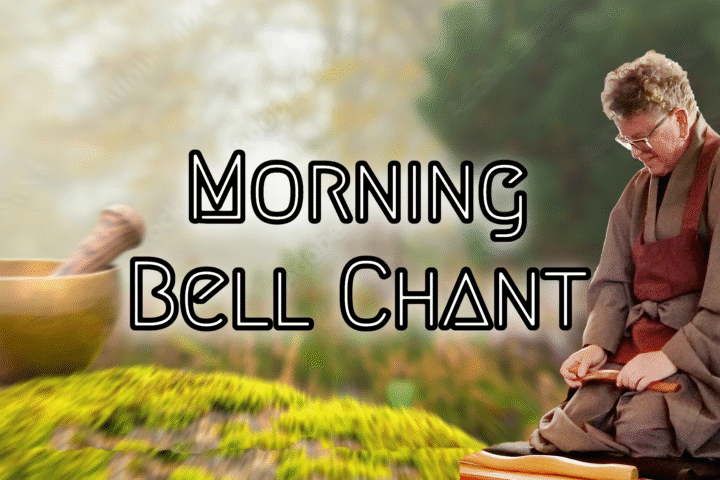
From the morning bell chant,
" Great Love, Great Sadness
Our original Teacher,
the golden "just like this" Buddha,
Amitabha, the Buddha of Infinite Time/Infinite Space."
We start off a new year looking into this t...
How does one begin their journey on the path to awakening? We can begin with four contemplations. The Four Thoughts, or Four Reminders, are foundational teachings that invite us to reflect on the preciousness of our huma...
Our daily activities can seem to be never-ending. From our work environment, to balancing this with a home life, family, and friends. With a little examination, we might discover that the underlying motive is not really ...
Tanha (literally “thirst”) is a Pali word the Buddha used to express clinging and aversion. Here are skillful ways to integrate a healthy relationship to desire in our life and practice....
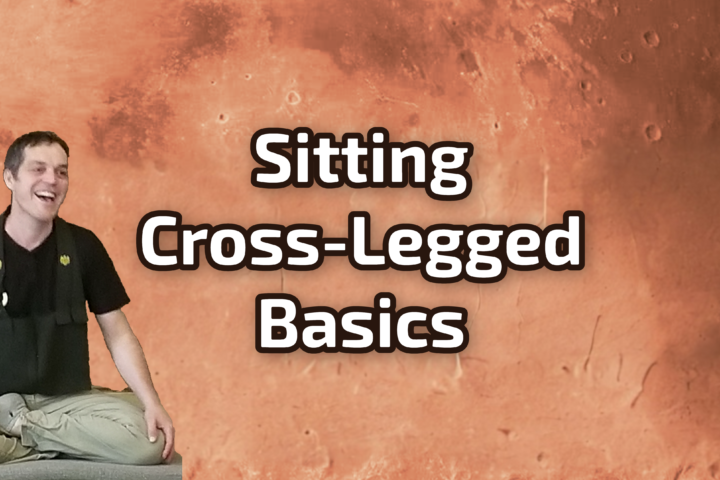
Step by step examples of traditional cross-legged ways to sit for meditation, demonstrated by Jokai Blackwell Roshi. Find a meditation position that works for you. We offer you these easy to understand tools to learn the...
A simple guided meditation practice using mindfulness of breathing-“Kayanupassana”. You can easily memorize this practice script to use not only during seated meditation but everywhere and anywhere you may find yours...
A demonstration of common and traditional positions for meditation and ways to adjust for comfort. We offer you these easy to understand tools to learn the art of meditation and mindful awareness....
An introduction to Koan practice in Chan/Zen. The Koan can be thought of as an essential question that we contemplate and examine in our heart/mind as a path and vehicle for awakening. For example, “What is the meaning...
Meditation practice is a journey of coming back to our unbounded mind, or our true nature. Coming back again and again in every part of our lives, including the present, we embody this complete awakening....
In the Zen tradition it is customary to meditate in silence. Prior to this 30 minute silent meditation Jokai Roshi provides guidance, emphasizing the importance of being still in a present way. Inviting the body to settl...
A 15 minute guided meditation focusing on the cultivation of equanimity. Can you develop the ability to be still and present for conditions and experiences as they proceed through natural transitions?...
Brad leads this guided meditation with an emphasis on fostering joy within oneself and in relation with others. Cultivating gratitude in our practice can cause many of the hindrances to fall away for a period; anxiety, s...
Beginning with attention to posture and groundedness with the earth, Jampa opens this guided meditation encouraging a gentle and spacious approach to one’s practice.
The beginning of a new year is a particularly fitting time to revisit the fundamentals of meditation, body, breath, and mind. Let’s refresh our meditation practice with sound practices involved in living a grounded, pr...
"The Buddha's teaching is like a raft. We use it to cross the ocean of suffering and arrive at the ‘other shore.’" We ride it through fog and storm, keeping to our practice, gradually the other shore comes into view....
Tim explains the techniques commonly used in Zen meditation beginning with intention, body position, breath and mind, followed by a silent meditation.
Brad offers a visualization practice to apply to difficult situations. The reading given, Temple of Healing is an excerpt from the book, “A Lamp in the Darkness” by Jack Kornfield....
One of the roadblocks to progress on the path is our habit of comparison and our discomfort with the success of others. This jealousy is the cause of great suffering. We become clouded with irritation and dejection. But ...